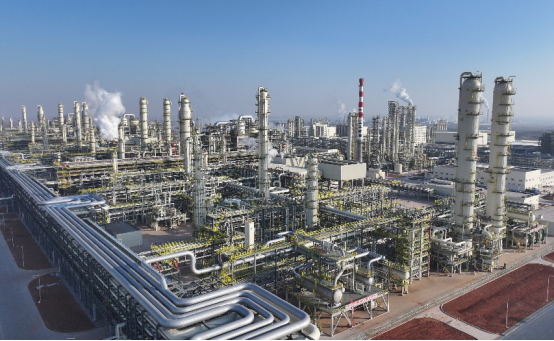
On November 9, 2025, the third-generation methanol-to-olefins (DMTO-Ⅲ) technology, independently developed by the Dalian Institute of Chemical Physics (DICP) of the Chinese Academy of Sciences, passed the scientific and technological achievement appraisal organized by the China Petroleum and Chemical Industry Federation in Beijing. The appraisal committee unanimously affirmed that the technology possesses full independent intellectual property rights and has achieved world-leading overall performance, marking China's continued global technology leadership in the methanol-to-olefins field. Previously, the world's largest single-site coal-to-olefins project employing this technology had been fully commissioned in Inner Mongolia, with an annual production capacity exceeding 3 million tons, setting multiple industry records.
Two Decades of Technological Iteration: From "First Breakthrough" to "Global Leadership"
Methanol-to-olefins (DMTO) technology is a core pathway for clean and efficient coal utilization, converting coal into ethylene, propylene, and other "industrial staples," effectively alleviating China's dependence on oil imports. DICP's DMTO technology R&D began in the 1980s and has undergone three generations of iteration: in 2010, the first-generation DMTO technology achieved its first global industrial application, breaking foreign monopolies; in 2014, the second-generation DMTO-Ⅱ technology was commissioned, increasing olefin yields through the addition of a C₄+ cracking unit; and today's DMTO-Ⅲ technology has achieved a qualitative leap through systematic innovation in catalysts, reactors, and processes.
"The core breakthrough of DMTO-Ⅲ lies in the precise regulation of molecular sieve catalysts," said Liu Zhongmin, Director of DICP and Academician of the Chinese Academy of Engineering. The team innovated synthesis methods to achieve synergistic regulation of the crystal phase, acidity, and morphology of SAPO molecular sieves, developing a new generation of catalysts with higher olefin yields, lower coke production, and a wider operating window. To date, the supporting 5,000-ton/year catalyst production line has achieved industrial production and has been successfully applied in multiple industrial units.
Data from the 72-hour continuous operation test of the pilot unit on September 26, 2025, showed: methanol conversion reached 99.06%, ethylene + propylene selectivity was 85.90 wt%, and the methanol consumption per ton of olefins was only 2.66 tons, with multiple indicators setting new industry records. Compared to the first-generation technology's consumption level of 2.97 tons per ton of olefins, the DMTO-Ⅲ technology has achieved significant improvements in raw material efficiency.
Industrial Application Sets New Records: World's Largest Coal-to-Olefins Project Commissioned
Behind the technological breakthrough lies the rapid implementation of large-scale industrial applications. In early 2025, the first 1-million-ton/year DMTO-Ⅲ unit of the Inner Mongolia Baofeng Coal-Based New Materials Project was successfully started up and produced qualified polyolefin products. By May, all three DMTO-Ⅲ units of the project had been fully commissioned, forming an annual production capacity of 3 million tons of olefins, 1.5 million tons of polyethylene, and 1.5 million tons of polypropylene, accounting for 23.4% of the national polyolefin production, making it the world's largest single-site coal-to-olefins project.
With a total investment of RMB 67.3 billion, the project completed its first-phase construction in just 18 months, setting a new industry construction timeline record. The project employs fully domestically produced equipment, with 23 technologies reaching world-leading levels, creating "five global largest" and "three national largest" equipment breakthroughs. Notably, the project also incorporates green hydrogen coupling technology, making it the world's only large-scale project to produce olefins using green hydrogen to replace fossil energy, with CO₂ emissions per 10,000 yuan of output reduced by approximately 50% compared to conventional processes.
"DMTO-Ⅲ technology increases the methanol processing capacity of a single unit from 1.8 million tons/year to over 3 million tons/year, without the need for a separate C₄+ cracking unit, with a simplified process flow and lower energy consumption," said the project leader from Sinopec Guangzhou Engineering Co., Ltd. To date, the technology has received 10 industrial licenses, with a total capacity exceeding 10 million tons/year, and a 1.35-million-ton/year unit is currently being designed, which will once again set a new world record.
Significant Economic and Social Benefits: 10% Cost Reduction, Over RMB 100 Million in Additional Annual Revenue
The industrial application of DMTO-Ⅲ technology has brought significant economic benefits to enterprises. Yan Guochun, Chairman of the National Energy Group Chemical Company, calculated that industrial units adopting DMTO-Ⅲ technology achieve a unit olefin cost reduction of approximately 10% compared to existing DMTO units. When the new-generation catalyst is applied to existing units, the methanol consumption per ton of olefins can be reduced from 3.0 tons to 2.85–2.90 tons, generating over RMB 100 million in additional annual revenue per plant.
For the Inner Mongolia Baofeng project, the gross margin of its olefin products is stable at around 30%, with an estimated industrial output value of approximately RMB 30 billion in 2025 and tax contributions exceeding RMB 3 billion, directly creating employment for nearly 6,000 people. At the industry level, this technology has propelled China's coal chemical equipment from "import dependence" to "independent leadership," injecting new momentum into the construction of a "manufacturing powerhouse" and an "energy powerhouse."
"To date, DMTO series technologies have accumulated 36 technology licenses, with a total olefin capacity exceeding 24 million tons/year, of which 18 units are already in operation," said Researcher Ye Mao of DICP. The team has signed cooperation intentions with Ningxia Baofeng Group for five 1-million-ton/year DMTO-Ⅲ units, with an estimated annual output value of RMB 50 billion after commissioning. In the future, the technology will also be extended to areas such as syngas and CO₂ hydrogenation to olefins, providing technical support for achieving the "dual carbon" goals.
The appraisal experts recommended accelerating the promotion and application of DMTO-Ⅲ technology and the new-generation catalyst, further expanding China's international competitiveness in the coal chemical field, promoting the conversion of coal resources into high-end chemical materials, and supporting the green transformation of traditional energy bases.