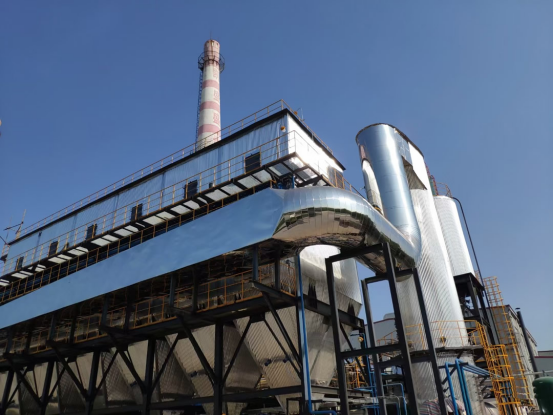
On December 31, 2025, the industrialization production line for the efficient separation and extraction of platinum group metals from carbonyl tailings, developed by Jinchuan Group Copper and Precious Metals Co., Ltd., was officially completed and put into operation. This production line is China's first fully automated, large-scale, and full-process recovery and purification line for platinum group metals from carbonyl tailings. It has overcome the key technical challenges of efficient separation and stable purification of platinum, palladium, rhodium, ruthenium, and iridium in complex systems, marking a new phase of intelligent, green, and large-scale development in China's secondary resource recycling of precious metals.
Platinum group metals are core catalytic materials in industries such as hydrogen energy, petrochemicals, environmental protection, and new energy vehicles, yet they are scarce resources with high external dependence. With the rapid growth of the green hydrogen industry, the demand for precious metal catalysts, represented by iridium oxide, continues to rise. The recovery and recycling of spent catalysts and industrial by-products have become an important pathway for ensuring strategic resource security and reducing industrial chain costs. Traditional recovery processes suffer from low automation, insufficient separation precision, poor stability, and high environmental control pressures, making it difficult to meet the requirements of high-end material regeneration.
The fully automated production line now commissioned represents a total investment of RMB 127 million, with construction commencing in September 2024 and completed on December 28, 2025. The production line is centered on core advantages including full-process automation, precise separation, green and low-carbon operation, and high-purity regeneration. It integrates continuous processing, intelligent control, online detection, efficient extraction, and electrolytic refining units, achieving integrated operation from raw material feeding to high-purity metal output. The system is equipped with online composition analysis and full-process data monitoring, enabling real-time closed-loop regulation of key parameters to ensure stable and controllable production. It is also supported by centralized waste gas treatment and standardized hazardous waste management systems, fully complying with safety and environmental regulatory requirements.
Authoritative testing and industrial validation have shown that the production line achieves a comprehensive recovery rate of over 95% for platinum group metals including platinum, palladium, rhodium, ruthenium, and iridium, with purified product purity consistently reaching 99.95%–99.99%. The recovered metals can be directly used in high-precision fields such as catalytic materials, acidic water electrolysis for hydrogen production, and electronic devices. Compared with traditional batch processes, labor costs have been significantly reduced, treatment efficiency and production capacity have been greatly increased, and energy consumption and pollutant emissions have been continuously optimized, truly realizing the closed-loop transformation of industrial waste into high-value strategic resources.
In recent years, China's precious metal recycling industry has been accelerating its upgrade. Guiyan Resources Dongying Green Recycling Base was commissioned in May 2025, with an annual processing capacity of 4,500 tons of spent catalysts and an annual output of 10 tons of platinum group metals. Yongxing Guiyan's Rare and Precious Metals Green Recycling Project was commissioned in October 2025, continuously enhancing regional resource recycling capabilities. The commissioning of this Jinchuan fully automated production line, in synergy with multiple domestic recycling bases, collectively builds a complete industrial chain of "use – deactivation – recovery – regeneration – reapplication."
Industry insiders indicate that the commissioning of this production line not only fills the gap in high-value utilization of carbonyl tailings in China but also echoes international advances in new anti-aging mechanisms for green hydrogen catalysts. On one hand, technological innovation extends the service life of catalysts; on the other hand, efficient recovery enables the recycling of precious metals. This dual-drive approach reduces material costs for green hydrogen and high-end manufacturing, providing critical support for achieving the "dual carbon" goals, ensuring industrial chain and supply chain security, and promoting the construction of zero-waste cities.
With the stable achievement of full production capacity and ongoing technological iteration, China's regenerative supply capacity for platinum group metals will continue to strengthen, providing robust support for the high-quality development of clean energy, high-end chemicals, environmental protection equipment, and other industries.
1. University of Oklahoma Discovers New Anti-Aging Mechanism for Green Hydrogen Catalyst "Iridium Oxide" (January 2026)
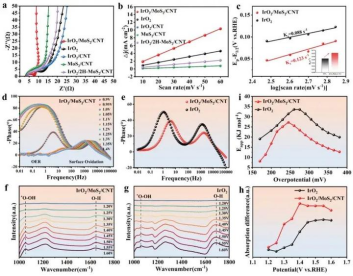
A new study published in Nature Catalysis has overturned the traditional understanding of the lifespan of green hydrogen electrolysis catalysts. The University of Oklahoma team discovered that the widely used iridium oxide catalyst does not become completely amorphous after long-term use, but instead forms "short-range ordered" surface structures, and these newly formed structures exhibit higher catalytic activity than the original form. This finding is expected to significantly reduce the usage of expensive iridium metal.
The research team from the University of Oklahoma published this groundbreaking work in the top international catalysis journal Nature Catalysis, revealing for the first time a novel anti-aging mechanism for the core green hydrogen catalyst iridium oxide (IrO₂). This overturns the conventional perception that "catalyst aging equals deactivation" and provides critical theoretical support for breaking through the cost bottleneck of proton exchange membrane water electrolysis (PEMWE) technology and accelerating its large-scale commercialization.
Green hydrogen is a core pathway for global carbon neutrality, and PEMWE has become a mainstream hydrogen production technology due to its high energy efficiency, fast response, and adaptability to renewable energy fluctuations. Iridium oxide is currently the only anode catalyst capable of stable service in acidic and strongly oxidizing environments. However, its global reserves are scarce, its price is high, and its activity attenuation after long-term operation has been a persistent constraint on the industrialization of green hydrogen.
Conventional theory holds that iridium oxide would completely amorphize during long-term electrolysis, with structural collapse leading to irreversible deactivation. Through combined in-situ synchrotron X-ray scattering, transmission electron microscopy, and electrochemical characterization, this study confirmed that iridium oxide does not become completely disordered during service, but instead forms short-range ordered paracrystalline structural motifs, exhibiting unique "self-evolution" anti-aging characteristics:
Dynamic Structural Reconstruction: Local ordered structures form on the surface during aging rather than permanent damage, exhibiting structural reversibility;
Active Site Regeneration: Newly exposed iridium atoms possess superior electronic structures, with intrinsic catalytic activity higher than that of the original crystals;
Self-Healing Cycle: Small amounts of dissolved iridium ions can be captured by the short-range ordered layers and redeposited in-situ,延缓 metal loss.
The study's principal investigator, Kasun Gunasooriya, stated that catalysts are not rigid structures that remain unchanged; the structural evolution during long-term operation can actually activate higher-activity sites. This discovery fundamentally changes the design logic for catalyst lifetime and stability.
Test data show that the structurally reconstructed iridium oxide catalyst exhibits an activity decay rate reduced by over 40%, with significantly enhanced stability. This means that catalyst lifetime can be greatly extended without increasing iridium loading, directly reducing the core material costs of electrolyzers.
Industry commentators have assessed that this mechanistic breakthrough will drive three major transformations in the green hydrogen industry: first, reducing iridium dependence—by leveraging natural reconstruction to improve efficiency and reduce precious metal consumption; second, revolutionizing catalyst design—shifting from "pursuing initial perfect crystals" to "actively inducing beneficial reconstruction"; and third, accelerating cost reduction—helping green hydrogen prices move toward the industrialization target of US$1 per kilogram.
The team is currently developing new low-iridium, long-lifetime catalysts based on this mechanism, with the expectation of rapid application in industrial-scale PEMWE devices in the future, promoting the widespread adoption of green hydrogen in energy storage, transportation, industry, and other sectors.
2. PNNL Develops Copper-Based Catalyst for Olefin Hydrogenation Under Mild Conditions, Replacing Palladium and Platinum!
The U.S. Pacific Northwest National Laboratory (PNNL) has broken the dependency on precious metals! The team has developed a copper hydride (CuH) complex catalyst with a trigonal planar configuration, achieving for the first time the hydrogenation of unactivated olefins using non-precious metal copper—a process traditionally requiring noble metals such as Pd/Pt. This catalyst can efficiently activate hydrogen (H₂) under mild temperature and pressure conditions, overcoming the industry bottleneck that single-center Cu(I) catalysts typically require harsh reaction conditions. This breakthrough not only reduces production costs for hydrogenation processes in bulk chemicals and fine chemicals, but also reveals the critical mechanism of geometric regulation in H₂ activation, providing a new strategy for the design of non-precious metal hydrogenation catalysts.
3. Honeywell Doubles Down on Hydrogenation with Revised Agreement to Acquire Johnson Matthey's Catalyst Business
Global energy and chemical giant Honeywell has announced a major M&A deal! The company has revised its agreement to acquire Johnson Matthey's catalyst technology business for £1.325 billion (approximately RMB 4.4 billion), with the closing date extended to July 21, 2026. The acquired business is a core supplier in the global hydrogenation, syngas, blue hydrogen, and sustainable aviation fuel (SAF) sectors, operating across three continents with 1,900 specialized employees. Honeywell plans to integrate the business into its UOP division, with a focus on strengthening core capabilities in hydrocracking, residue hydrotreating, and renewable fuel hydrogenation, further perfecting its low-carbon fuel and green hydrogen industrial chain布局.
On February 23, the company revised the acquisition agreement with Johnson Matthey, reducing the purchase price for the catalyst business from £1.8 billion to £1.325 billion, a 26.4% decrease, while also postponing the transaction deadline. Some have joked that Honeywell "demonstrated masterful negotiation skills," but from a professional perspective, this is a rational move by a mature enterprise—affected by fluctuations in global chemical demand and precious metal prices, appropriately reducing the consideration helps control costs while ensuring a positive contribution to earnings per share after the acquisition.
It's worth noting that Johnson Matthey's catalyst business is indeed a "hot commodity," focusing on blue hydrogen, sustainable aviation fuel (SAF), carbon capture, utilization, and storage (CCUS), and other hot-button areas, with total assets of RMB 15.1 billion. Acquiring it will enable Honeywell to offer for the first time a full low-emission fuel solution, seizing a first-mover advantage in the new energy chemical track. This "long-awaited acquisition" is truly a "sure-win deal."

4. BASF Launches Next-Generation Fourtiva Fluid Catalytic Cracking Catalyst Globally (Second Half of 2025)
Global chemical giant BASF has officially unveiled its latest generation fluid catalytic cracking (FCC) catalyst—Fourtiva. Designed specifically for complex and heavy refinery feedstocks under increasingly stringent fuel standards, this catalyst not only significantly increases the yield of high-octane gasoline but also effectively reduces coke formation. It helps refineries worldwide maximize profitability while lowering carbon emissions.
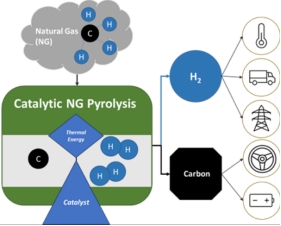
5. Green Hydrogen Technology Milestone: NETL Develops Iron-Based Catalyst with Near 100% Methane Conversion!
The U.S. Department of Energy's National Energy Technology Laboratory (NETL) has announced a major breakthrough in methane pyrolysis catalysts for hydrogen production! This iron-alumina-based catalyst, optimized through doping with transition metals such as Ni, Co, Mo, Mn, and Zn, has achieved nearly 100% methane conversion in both fixed-bed and fluidized-bed tests, significantly reducing the technical difficulty and cost of hydrogen/methane separation. The catalyst addresses the industry pain points of easy deactivation and low conversion efficiency associated with traditional products. A U.S. non-provisional patent has been filed and cooperative licensing is open, enabling direct adaptation to industrial-scale hydrogen production scenarios and providing key technical support for the stable supply of green hydrogen and chemical hydrogenation feedstocks.

6. New Breakthrough in Petrochemical Hydrogenation: Clariant Launches OleMax™ 600 Catalyst, Significantly Reducing Palladium Usage While Maintaining High BTX Yield
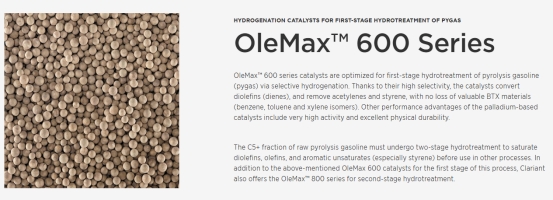
Switzerland-based Clariant has officially launched the new-generation OleMax™ 600 series of selective hydrogenation catalysts for pyrolysis gasoline (pygas), specifically designed for the petrochemical industry's pygas hydrogenation process! This palladium-based catalyst delivers three core advantages: ① High selectivity for diene conversion and removal of acetylenes and styrene, with 100% retention of BTX (benzene/toluene/xylene) core products; ② Significantly reduced palladium loading compared to previous generations, greatly decreasing precious metal dependency and production costs; ③ Excellent anti-coking performance supporting long-term stable operation. When paired with the OleMax™ 800 series, it forms a complete "first-stage + second-stage" hydrogenation solution, perfectly meeting the large-scale production needs of petrochemical enterprises.